

Image source: exhibitions.asianart.org
South Korea’s transformation from a developing country into a global cultural powerhouse represents one of the most compelling cases in international relations, particularly through the evolution of Korean policy Segyehwa into the global phenomenon known as Hallyu. The term Segyehwa, introduced in thw early 1990s under President Kim Young-sam, referred to a state led globalization strategy aimed at elevating South Korea’s position in the international system. Rather than relying on passive market forces, the Korean government actively shaped globalization through policies focused on economic liberalization, technological development and Integration. This demonstrate that globalization can be a strategically constructed by the state, not merely experienced as an external process. Over time, however, Segyehwa evolved beyond economic goals and laid the foundation for cultural expansion, ultimately leading to the emergence of Hallyu.
The Asian Financial Crisis in 1997 marked a critical turning point in this transformation. The crisis exposed structural weeknessses in South Korea’s economu and forced policymakers to reconsider their development strategy. In response, the state began investing heavily in knowledge industries, digital infrastructure, and cultural production. This shift was crucial because it redefined culture as an economic and political asset rather than merely a social byproduct. Cultural industries such as music, film, and television were no longer seen a secondary sectors but as strategic tools for global competitiveness. This transition reflects a broader shift in international relations from traditional forms of power, such as military and economic strength, toward soft power, where influence is achieved through attraction and cultural appeal.
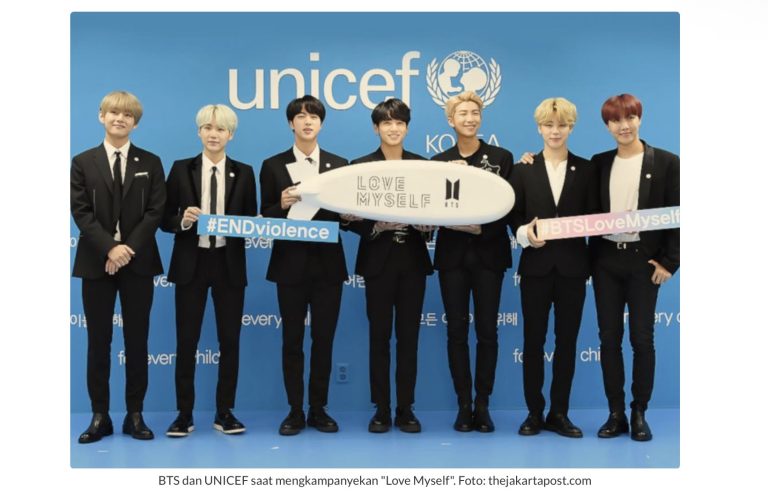
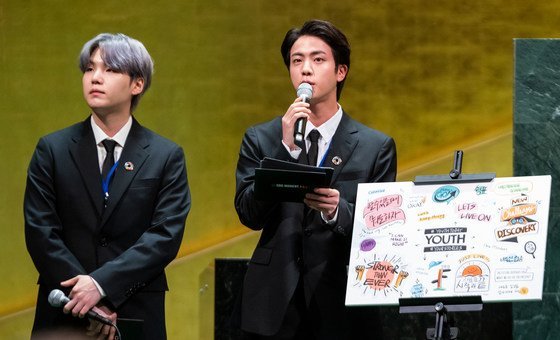
The rise of Hallyu illustrates the success of this transformation. Hallyu, or the Korean Wave, refers to the global popularity of South Korean cultural products, including K-pop, films, dramas, and others digital content. What began as a regional phenomenon in East Asia quickly expanded into a global movement, supported by advancement in information technology and the strategic promotion of cultural exports. The global expansion of Hallyu is closely linked to the development of global pipelines that connect domesyic cultural industries with international markets, enabling knowledge and content to circulate across borders (Berg, 2018). As a result, Korean cultural products have been able to reach diverse audiences and establish a strong global presence. The concrete examples demonstrate the scale and impact of Hallyu. Korean dramas, films, and pop music have played a crucial role in shaping international perception of South Korea, particularly in countries such as China, where they serve as a cultural window through which audiences gain familiarity with Korean society (Jang, 2012). At the same time, Hallyu has expanded beyond media, into broader cultural consumption, influencing products such as fashion, food, ad electronics, and becoming a significant force in global consumer culture (Suminar, 2018). These development highlight how cultural exports can function not only as entertainment but also as tools of economic expansion and international influence.
This information lies in its broader implications for global politics and cultural dynamics. First, it demonstrates that middle powers like South Korea can significantly influence the international system without relying on military dominance. Through Hallyu, South Korea enhanced its global image and increased its cultural visibility, showing how attraction can be a powerful from of influence. Second, it challenges the traditional assumption that globalization leads to Western cultural dominance. Instead, Hallyu represents a diversification of global cultural flows, where non western countries actively shape global culture. Academic studies also show that Hallyu has become a major subject in international research, reflecting its significance in global cultural and political discourse (Hong et al., 2019). In my opinion, the success of Hallyu is not merely about entertainment but about strategic vision and long term policy consistency. South Korea recognized early on that cultural identity could become a valuable global asset and invested accordingly. However, this success also raises critical questions. One issue is sustainabilitu as more countries attempt to replicate Korea’s model, competition in cultural industries will intensify. Indeed, scholars argue that Hallyu should not be viewed as an uncontested or one directional flow, but rather as part of a competitive global cultural landscape (Kim et al., 2019). This suggests that Hallyu exists within a dynamic system of cultural exchange and rivalry.
Furthermore, while hallyu is often celebrated as a success story, it also has limitations as a form of soft power. Cultural influence does not always translate into political influence at the state level. Although hallyu has improved south Korea’s image, it does not necessarily resolve political tensions or conflicts with other countries. Therefore, while Hallyu enhances South Korea’s global standing, it should be understood as one component of a broader strategy rather than a comprehensive solution to international challenges. At the end, the evolution from Segyehwa to Hallyu illustrates how a state led globalization strategy can evolve into a powerful from of cultural influence. South Korea’s experience demonstrates that globalization can be actively managed and that culture can serve as a key resource in international relations. This case is important because it challenges conventional notions of power, highlights the role of culture in global politic, and provides a model for other countries seeking to enhance their global presence. However, it also reveals the complexities and limitations of soft power, emphasizing that cultural success must be understood within a broader geopolitical context.
Writer: Athirah Azzahrah Nirwan – 202410360110066
Bibliography
Asian Art Museum. (n.d). Hallyu! The Korean Wave. https://exhibitions.asianart.org/exhibitions/hallyu-the-korean-wave/
Kim, H. K., Kim, A. E., & Connolly, D. (2016). Catching up to Hallyu? The Japanese and Chinese Response to South Korean Soft Power. Korea Observer, 47(3).
Kompas. (2022). “Hallyu”, Faktor Keberhasilan yang Menjadi “Soft Power” Korea Selatan. https://www.kompas.com/global/read/2022/12/23/073943370/hallyu-faktor-keberhasilan-yang-menjadi-soft-power-korea-selatan?utm_source=chatgpt.com
Open Access Korea. (2019). Geography of Hallyu Studies. https://oak.go.kr/central/journallist/journaldetail.do?article_seq=23095&utm_source=chatgpt.com
Samosir, N., & Wee, L. (2023). Sociolinguistics of the Korean Wave: Hallyu and soft power. Routledge.
Seoul Beats. (2017). The Hallyu Soft Power. https://seoulbeats.com/2017/12/the-hallyu-soft-power/?utm_source=chatgpt.com
SooYoung Park. (2016). Hallyu (K-Culture) and ‘Dynamic Korea’ – Some Reflection on a new emerging global popular culture -. Global Cultural Contents, 24, 103-127.
Suminar, R. (2018). Fenomena Hallyu Di Indonesia. Syntax Literate; Jurnal Ilmiah Indonesia, 3(12), 128-137.
Yoon, K. (2023). De/Constructing the soft power discourse in Hallyu. Communication Research and Practice, 9(3), 341–357. https://doi.org/10.1080/22041451.2023.2237811
Yudhantara, R. L. (2012). Hallyu sebagai soft power Korea Selatan di Indonesia (Doctoral dissertation, Universitas Gadjah Mada).
김은미 and Jiwon Ryoo. (2007). South Korean Culture Goes Global : K-Pop and the Korean Wave. Korean Social Science Journal, 34(1), 117-152.
아유 리스카 와흐유디야 (2019). The Role of Korea’s Soft Power in Improving Korean-ASEAN Relations. 신아세아, 26(4), 128 – 157.