
Image source: bluepancakeinkorea
The Korean Peninsula has historically been geographically wedged between major powers: the Asian mainland (China) and the Pacific Ocean (Japan). This position has had a dual impact; on the one hand, it facilitated cultural exchange, but on the other, it made Korea vulnerable to the ambitions of more powerful neighbors. The central issue raised in this essay is how Korea managed to maintain its national uniqueness amidst the dominance of hegemonic East Asian civilization. This essay argues that the preservation of Korean cultural identity, from linguistic roots to social structure, is not simply a legacy of tradition, but rather a crucial soft power mechanism for maintaining political sovereignty from ancient times to the modern regional order.
Korea’s history is marked by its ability to adopt superior Chinese technology and values while maintaining political independence. For example, despite Korea’s deep adoption of Confucianism, they successfully won a war against the Tang Dynasty in the 7th century to secure their autonomy. After the fall of the Ming Dynasty to the Manchus, the Joseon elite even considered themselves the pure defenders of Confucian civilization, a concept known as “Little China.” This strategy allowed Korea to establish a sense of cultural superiority over its neighbors and provided the moral foundation for its policy of isolation from the outside world to protect the nation’s sovereignty. Korean identity is built on subtle but fundamental differences that set them apart from their neighbors:
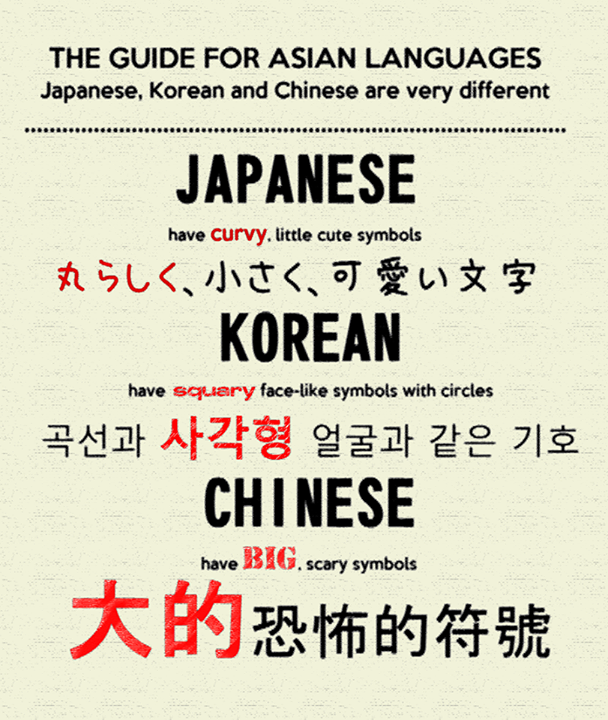
Linguistic Identity: The Korean language is structurally very different from Mandarin and Japanese, possibly even having Paleo-Siberian roots. This created a distinct sense of identity from the beginning.
Eating Utensils: Unlike China and Japan, which shifted entirely to wooden chopsticks, Korea retained the use of metal spoons and chopsticks. This use of metal is rooted in Korea’s ancient history of metalworking (reflected in the surname “Kim,” meaning metal) and represents adherence to ancient Confucian traditions that other countries have abandoned.
Political Power Structure: Unlike the absolute power of the Emperor in China or the decentralized system of Daimyo in Japan, power in Korea was divided between the King and the Yangban elite. This division of power proved to provide remarkable stability, with the Joseon Dynasty lasting 525 years far longer than the Ming or Qing Dynasties in China.
Using the theory of Constructivism in International Relations, we can see that Korean identity is “constructed” through these symbols to distinguish between “Self” and “Other” in the region. In my opinion, the unique characteristics recorded in ancient Chinese historical records about Koreans, such as their love of festivals, singing, and dancing, are the precursors to modern South Korea’s soft power. This issue of identity is crucial because in the era of globalization, middle-income countries often experience identity crises. However, South Korea uses its cultural distinctions (such as archery, dress styles, and social traditions) to strengthen its bargaining position in cultural diplomacy. By remaining “different,” South Korea ensures that it is not merely a follower of a great power, but a major player in shaping regional norms.
In conclusion, Korea’s cultural resilience is inseparable from its political survival. Through its unique language, social traditions, and political structure, Korea has proven that national identity is the most powerful instrument of sovereignty. For a nation at the crossroads of East Asia, maintaining its identity is not merely a matter of romanticizing the past, but a strategic necessity for maintaining independence amidst ever changing geopolitical pressures.
This strength has transformed into strategic capital in the modern era, where these traditional values have become the foundation of South Korea’s now-globally recognized soft power. For a nation geopolitically at a “crossroads,” the ability to highlight cultural differences is not merely about romanticizing the past or preserving tradition, but rather a strategic necessity (Cultural Diplomacy) to maintain its autonomy and bargaining position amidst ever-changing global competition. Ultimately, Korean history teaches that a nation’s sovereignty is determined not only by military or economic strength, but also by how strongly they maintain their roots of identity.
Writer: Muhamad Alfarizi – 202410360110032
DAFTAR PUSTAKA
Fan, Ka-wai, “The Little Ice Age and the Fall of the Ming Dynasty : A Review,” 2023 https://doi.org/10.3390/cli11030071
Selatan, Korea, Citra Hennida, Reza Akbar Felayati, dan Sri Harini Wijayanti, “Budaya dan Pembangunan Ekonomi di Jepang ,” hal. 248–63 https://scholar.google.co.id/scholar?hl=id&as_sdt=0%2C5&q=perbedaan+struktur+politik+korsel+jepang+china&oq=#d=gs_qabs&t=1777643949061&u=%23p%3DhRq_TUZGotEJ
Seth, Michaecl j., “Korea: A history of uniqueness and different paths,” 2019 https://www.unav.edu/web/global-affairs/detalle/-/blogs/korea-a-history-of-uniqueness-and-different-paths-2