
Images Source: Google and Pinterest
Introduction
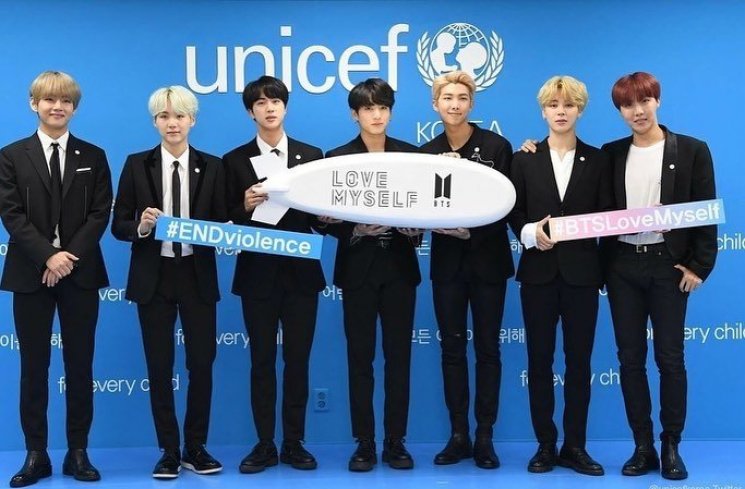
Over the past few decades, South Korean culture has gained global popularity through various industries such as music, movies, beauty products, food and etc. This global cultural expansion is widely known as the Korean Wave or Hallyu. Beyond entertainment, the Korean Wave has become an important component of south korea’s political strategy in exercising soft power. According to Joseph Nye, soft power refers to a country’s ability to influence others without relying on coercive measures such as military force or economic sanctions. Instead, influence is achieved through attraction, culture, values and policies. Through significant investment in cultural initiatives, South Korea has successfully utilized soft power to enhance its international image and maintain its global influence. One unique example of this strategy is the promotion of the Korean alphabet, Hangul, as part of its cultural diplomacy. Cultural diplomacy is a soft power approach in international relations through which countries pursue their national interests by promoting cultural exchanges, education, and the arts (Gunawan, 2024).
A notable example of this cultural diplomacy is the adoption of the Hangul writing system for the Cia-Cia language in Indonesia. This initiative was supported by professor Ho-young Lee from the Department of Linguistics at Seoul National University, who has been actively promoting the globalization of Hangul. The project aimed not only to help preserve the Cia – Cia language but also indirectly strengthened the spread of cultural ideas abroad.
Discussion
South Korea and Indonesia have maintained strong cooperation in the cultural and educational sectors. In 2000, the two countries ratified a culturl cooperation agreement aimed at promoting mutual understanding through cultural excahnges. Furthermore, during the visit of Lee Myung-bak to Jakarta in 2009, both countries signed a Memorandung of Understanding (MoU) in the field of Education. This agreement included joint research projects, exchanges of lecturers and student, academic collaboration, seminars, conferences, exhibitions, and the establishment of joint research centers. These agreement created a framework for broader collaboration, including linguistic and cultural initiatives such as the Hangul Project in Baubau City, Southeast Sulawesi.
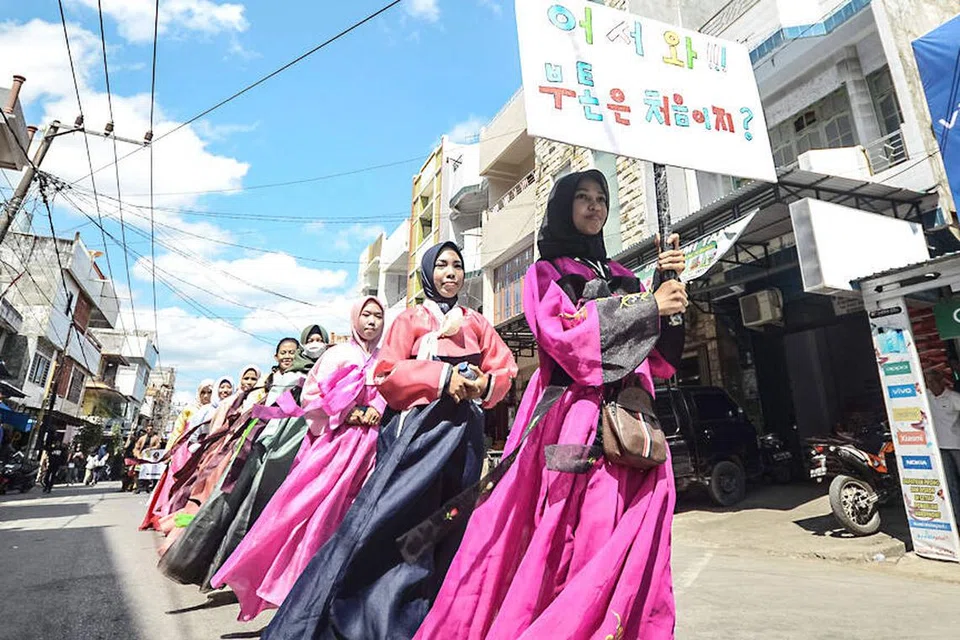
In 2009, Hangul was introduced to the Cia-Cia ethnic group in Baubau City, located in the Buton Regency of Southeast Sulawesi. The initative emerged after linguisitic researchers discovered phonetic similarities between Cia-Cia language and Korean pronounciation. The idea gained momentum during the International Manuscript Symposium IX held in Baubau in 2005. Linguists from various countries attended the symposium, including Korean scholar Cho Tae-hyun from the Hunminjeongeum Research Institute. While visiting Baubau, Cho Tae-hyun became interested in the unique phonetic characteristics of the Cia-Cia language. Following discussions between the Baubau City government, Korean researchers, and community leaders, an agreement was eventually reached. On September 30, 2010, community leaders in Sorowolio formally approved the adaptation of Hangul for writing the Cia-Cia Language.
After the agreement, both parties began implementing the writing system through various educational programs. The introduction more than 15 years ago. The Hangul based writing system for the Cia-Cia language has continued to exist and has been incorporated into the educational curriculum in Baubau. However, researchers note that the script has not yet been widely used in everyday communication and may remain largely symbolic. Nevertheless, the initiative has had positive cultural effects. Strudies indicate that student in the Cia-Cia community tend to perceive South Korea positively after being exposed to Hangul education programs. Even among indivisuals who did not directly participate in Korean cultural programs, perception of south korea as a positive and modern country have increased.
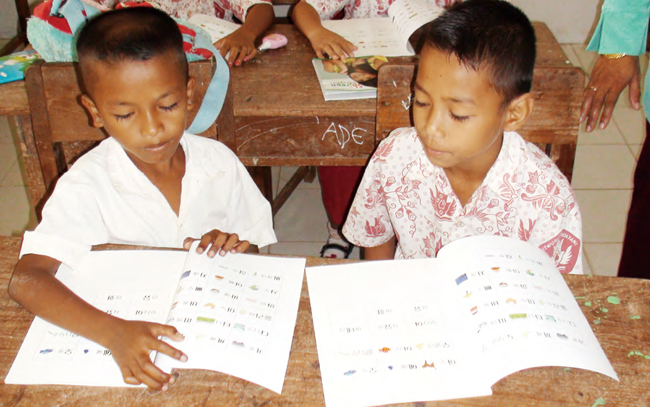
The program has also contributed to opportunities in education and employment. For example, South Korea has provided scholarship for Cia-Cia natives to study at SNU and become instructor for the Hangul or even Korean Language at Baubau, Scholarship for studies in Korea and additionally, the growing importance of Korean language. has opened employement opportunities for indonesian workers through programs such as the Employment Permit System (EPS).
However, several challenges remain, including unequal access to language education, limited numbers of qualified teachers, and high costs associated with language training. The Cia-Cia project reflect a broader ambition to globalize Hangul. Professor Ho-young Lee has emphasized on his interview by SNU that the potential of Hangul as a writing system that can be adapted fot minority languages around the world. Inspires by Hangul adaptation for minority communities, Lee proposed expanding the use of Hangul to help preserve endangered language. From this perspective, the Cia-Cia case illustrates how linguistic collaboration can simultaneoslu support language preservation and promote South Korea’s cultural influence
Conclusion
The adaptation of Hangun for the Cia-Cia Language demonstrates how south korea effectively utilizes cultural diplomacy as a form of soft power. Through cooperation in education, linguistics and cultural exchange, South korea has strengethened its international image while contributing to the preservation of a regional language in Indonesia. Although the project still faces challenges in terms of practical implementation and community acceptance, it remains an important example of how cultural initiatives can shape international relations. The Cia-Cia case illustrates that languagem culture, and education can serve as powerful instruments of diplomacy in the contemporary global landscape.
Writer: Athirah Azzahrah Nirwan – 202410360110066
References
ABC NET. (2024). Indigenous Indonesians use Korean letters to save a dialect. Retrieved from https://www.abc.net.au/asia/indigenous-indonesians-use-korean-letters-to-save-dialect/103306022. Openned 12 March 2026
Badan Riset dan Inovasi Nasional. (2025). Cia Cia Native Language in Buton Island Adopts Hangul Script from Korea. Retrieved from https://www.brin.go.id/en/news/122399/bahasa-daerah-cia-cia-di-pulau-buton-mengadopsi-bahasa-hangul-dari-korea. Openned 12 March 2026
Berita Harian (2024) Suku di Indonesia guna abjad Korea lestarikan warisan Bahasa. https://www.beritaharian.sg/dunia/suku-di-indonesia-guna-abjad-korea-lestarikan-warisan-bahasa. 13 March 2026
Darmanto, D., Cahyo, E. N., Nengrum, Y. S., & Adefiannisa, F. J. (2025). Linguistic diplomacy: the role of Korean language in Indonesia–South Korea relations. Jurnal Multidisipliner Bharasumba, 4(03), 401-419.
Iwan Gunawan. (2024). Korean Cultural Diplomacy: Uniting Society Through Soft Power. Jurnal Info Sains : Informatika Dan Sains, 14(01), 1079–1086. Retrieved from https://ejournal.seaninstitute.or.id/index.php/InfoSains/article/view/4262
Lee, Ho-Young. (n.d). Globalization of Hangeul, Standing at the Center of the Future of Languange. SNU PEOPLE. Retrieved from https://people.snu.ac.kr/en/77/4. Openned 12 March 2026.
Mulyaman, D., Virgianita, A., & Candra, D. S. (2021). The Perception of Cia-Cia Tribe Students in Southeast Sulawesi Toward South Korea: The Case of Education Aid for Cia-Cia Language Preservation. Global Strategis, 15(1), 187–217. https://doi.org/10.20473/jgs.15.1.2021.187-217
Paramita, W., & Saeri, S. (2018). Study Of Application Of Korean Alphabet Among Cia-Cia Tribe In Baubau City (Doctoral dissertation, Riau University).
Park, Ashley. (2024). Soft and Smart Power: The Developmet of South Korea Diplomacy. Colombia Political Review. Retrieved from https://www.cpreview.org/articles/2024/1/soft-and-smart-power-the-development-of-south-korean-diplomacy. Openned 12 March 2026
Zahara, B. R., Ramadhan, S. A., Syabina, S. V. R., & Milady, T. K. (2023). The Korean Wave and Cultural Soft Power Diplomacy: Evaluating Its Impact on South Korea-Indonesia Bilateral Relations in the Creative Industries. Candidate: Jurnal Sains Politik, 1(2), 93–122. Retrieved from https://journal.uinsgd.ac.id/index.php/candidate/article/view/35479